
OUR MISSION
To cultivate a culture of inquiry and evidence-based public policy-making in the Somali Region.
ABOUT HIRAAD
Hiraad Institute, a non-partisan, non-profit think tank established in the Somali Region of Ethiopia, fosters dialogue and contributes to evidence-based policy making. The Institute serves as a hub for policy-oriented research, analysis, and knowledge production.
The Institute is based in Jigjiga, Somali Region, Ethiopia.
OUR STORY
For decades, policy decisions affecting the Somali Region have been shaped without sufficient input from the communities they impact most. Hiraad Institute was founded to change that.
The word "Hiraad" means "vision" in Somali — a fitting name for an institute committed to seeing clearly, thinking independently, and working toward a future where policy is informed by evidence and grounded in local realities.
We believe that sustainable development and lasting peace in the Horn of Africa require research institutions that understand the region from the inside — its languages, cultures, histories, and aspirations.
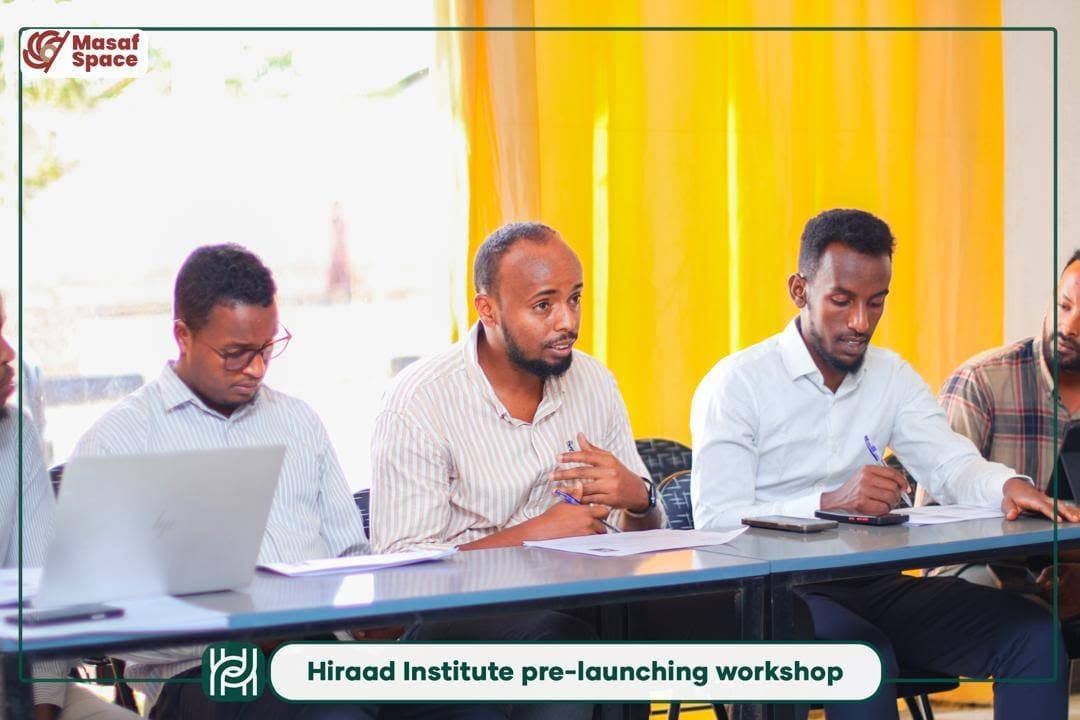

OUR MISSION
To cultivate a culture of inquiry and evidence-based public policy-making in the Somali Region.
OUR VISION
An empowered Somali Region where evidence-based public policy-making guides policies, strategies, and interventions.
CORE VALUES
01
Hiraad maintains strict non-partisanship and analytical independence. Research outputs are insulated from political pressure, donor influence, and advocacy-driven distortion.
02
All research and policy analysis is grounded in the social, cultural, historical, and economic realities of the Somali Region and the wider Somali context.
03
The Institute prioritizes engagement with marginalized populations, including pastoralists, women, youth, and remote communities, recognizing them as essential contributors to knowledge production.
04
Hiraad operates with openness in its governance, partnerships, and outputs, reinforcing public trust and institutional credibility.
05
Research is designed not only to inform but to influence — through actionable recommendations, stakeholder engagement, and sustained dialogue with decision-makers.
OUR TARGET
Hiraad Institute supports evidence-based decision-making by producing objective, policy-oriented research on policy and governance, the peace-conflict nexus, economic development, climate change, history and collective memory, and social cohesion. The Institute provides policy briefs, research reports, panel discussions, and timely recommendations to government institutions, parliamentarians, and policy advisors to strengthen legislation and public policy.
The Institute collaborates with civil society organizations, development partners, academic institutions, and private sector actors to promote research-informed programming and collective action. Through joint research, dialogue, and knowledge sharing, Hiraad contributes to stronger institutions, sustainable investments, and inclusive regional development.
Hiraad is committed to making research accessible through simplified publications, policy briefs, infographics, public forums, panel discussions, and community engagement. By promoting informed public dialogue, the Institute strengthens civic participation, encourages accountability, and supports evidence-based public discourse.
OUR APPROACH
Hiraad applies a structured, cyclical, and adaptive policy engagement model designed to ensure that research is grounded in local realities, responsive to national priorities, and capable of generating sustained policy impact.
01
Field engagement with communities, consultations with policymakers, and review of existing policies to identify real needs.
02
Methodologically sound research with qualitative and quantitative methods, integrating historical and political economy perspectives.
03
Rigorous analysis identifying patterns, drivers, and feasible policy options within existing constraints.
04
Testing assumptions through technical workshops, closed-door briefings, roundtables, and community consultations.
05
Policy briefs for decision-makers, advisory support, high-level forums, and public dissemination through media and open events.
06
Training on policy analysis, support for institutional learning systems, development of tools and frameworks, mentorship and peer learning.
07
Tracking uptake of recommendations, evaluating policy outcomes, and documenting lessons for continuous institutional learning.
08
Strategic reflection informed by changing political, social, and environmental conditions to ensure ongoing relevance.
Whether you are a government institution, international organization, academic partner, or civil society group, we welcome collaboration that strengthens evidence-based policymaking in the Horn of Africa.